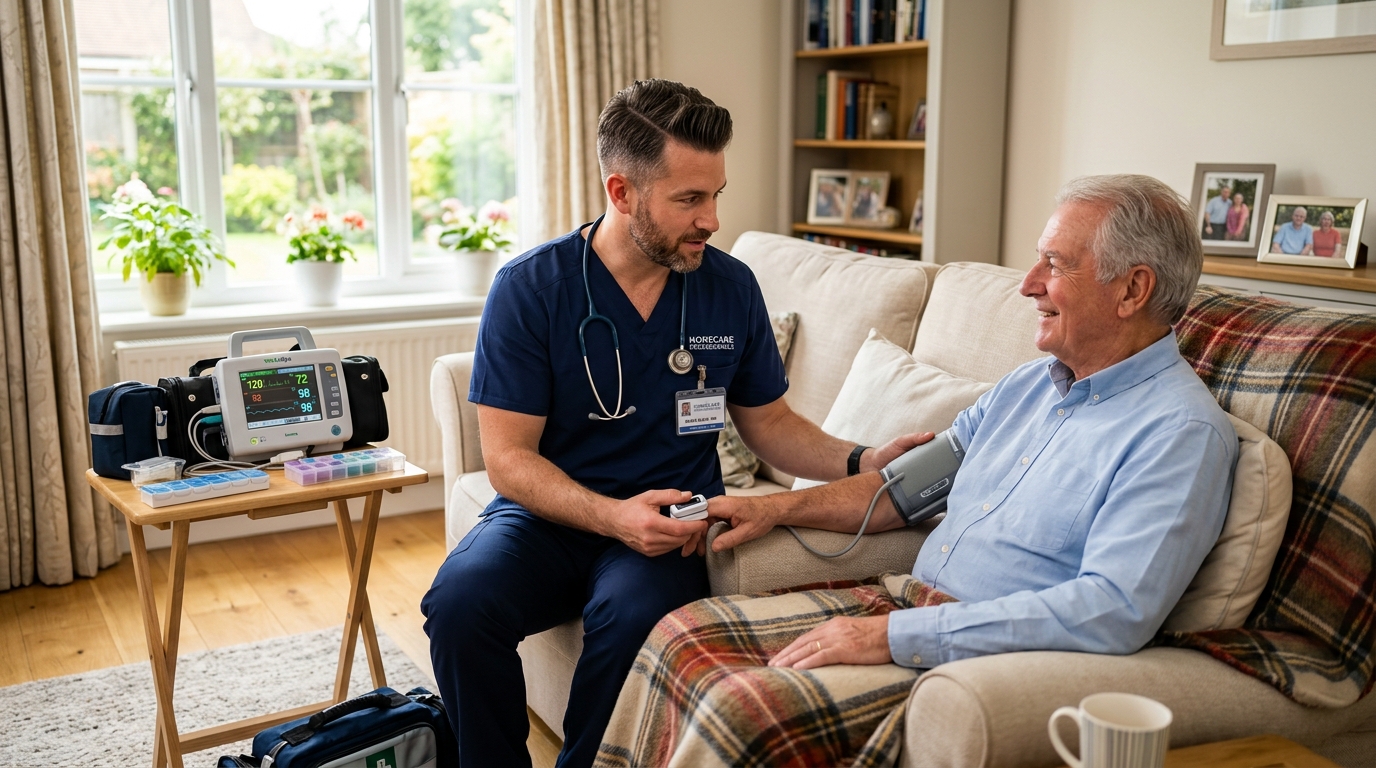
Discharge from the hospital is a milestone, but the recovery journey has just begun. Proper post-operative care at home prevents readmissions, alleviates pain, and accelerates healing.
1. Sterile Wound Dressing & Infection Control
Surgical sites must be kept clean, dry, and dressed in strictly aseptic conditions. A certified nurse ensures correct antiseptic application and monitors for warning signs: abnormal redness, localized heat, foul drainage, or sudden fever spikes.
2. Vital Sign Tracking & Pain Control
Adequate pain relief is necessary not just for comfort, but to allow gentle breathing exercises and early mobilization. Nurses ensure prescribed analgesics and IV/IM doses are administered on schedule without over-sedation.
3. Deep Vein Thrombosis (DVT) Prevention & Early Mobility
Prolonged immobility post-surgery increases the risk of blood clots. Gentle leg exercises, compression stockings, and supported transfers guided by nursing staff protect against DVT.
4. Nutrition and Hydration for Tissue Healing
Protein-rich diets, fiber intake to counter medication-induced constipation, and adequate hydration directly influence surgical wound closure and immune resilience.