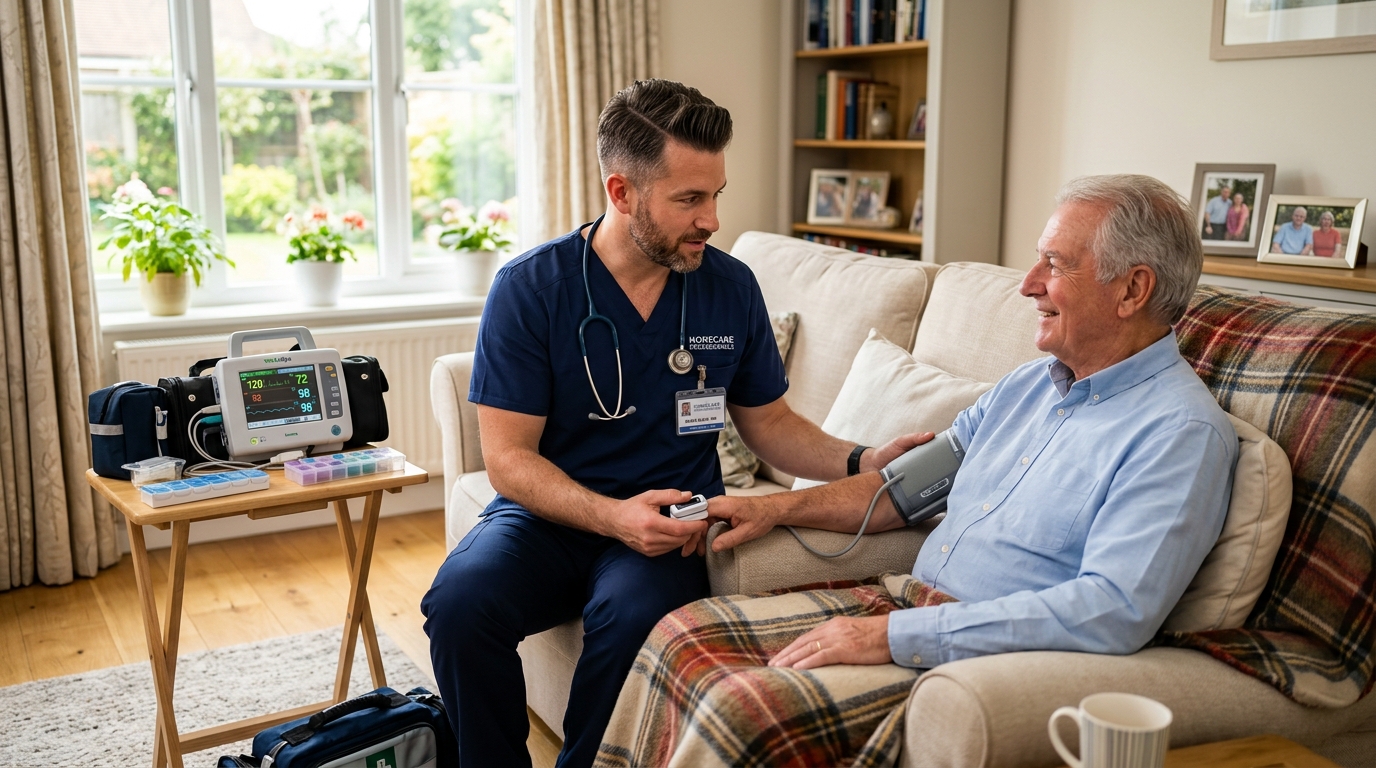
While hospitals are vital for acute surgical procedures and emergency interventions, prolonged hospitalization often carries hidden downsides: risk of hospital-acquired infections (HAIs), unfamiliar sleep environments, sensory overload, and emotional isolation for recovering patients.
Core Comparison Takeaways
• Infection Reduction: Home environments drastically cut exposure to multidrug-resistant hospital pathogens.
• Faster Emotional Healing: Patients surrounded by family, familiar bedding, and home-cooked meals recover appetite and cognitive stability faster.
• One-on-One Dedicated Attention: In hospitals, a floor nurse typically juggles 6 to 10 patients. At home, your nurse is 100% dedicated to one patient.
1. Clinical Safety & Hospital-Acquired Infections (HAIs)
For post-surgical patients, immunocompromised seniors, or patients with open wounds or urinary catheters, hospital environments pose significant exposure risks to antibiotic-resistant bacteria. Transitioning to professional home nursing once stable allows sterile wound care and vital monitoring in a protected, clean private residence.
2. Dedicated 1-on-1 Patient Focus
In acute hospital wards, nursing staff must split their time across multiple beds, leading to delayed call bell responses and hurried interactions. In contrast, home nursing delivers individualized care:
- Constant vital monitoring without split attention.
- Personalized medication schedules tailored to the patient’s sleep-wake cycles.
- Immediate assistance with mobility, bathroom needs, and posture adjustments to prevent bedsores.
3. Emotional Well-being & Family Presence
Hospital visiting hours and sterile clinical settings can induce anxiety and hospital delirium, particularly in elderly patients with early dementia or cognitive fragility. Healing at home in Delhi NCR allows loved ones to remain present, celebrate small milestones, and maintain a comforting family environment.
4. Financial Predictability
Prolonged hospital room charges, nursing fees, and miscellaneous bed charges accumulate rapidly. Home nursing offers transparent 12-hour or 24-hour shift packages combined with rented ICU equipment (BiPAP, Oxygen, Medical Beds) at a fraction of standard hospital admission overheads.